Gay Seville · City Guide
First time in Seville? Then our gay Seville city guide page is for you.
Book A Travel Gay Approved Hotel
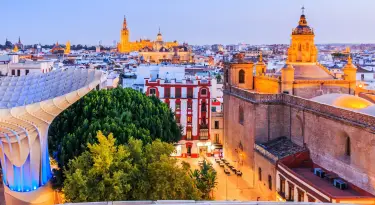
Seville is the capital of Andalusia and one of southern Spain's most distinctive cities. Famous for its flamenco, Moorish architecture, tapas culture and extraordinary spring festivals, it's a city where much of daily life happens outdoors. Think shaded squares, neighbourhood bars, late dinners and streets that stay busy long after sunset.
The city's history is visible everywhere, from the Real Alcázar and Seville Cathedral to the narrow lanes of Santa Cruz and the colourful houses across the Guadalquivir River in Triana. But Seville isn't just about historic monuments. Its independent cafés, contemporary arts scene and nightlife give the city a character that extends well beyond the usual sightseeing circuit.
For LGBTQ+ travelers, Seville offers a smaller, more local gay scene than Madrid or Barcelona. Gay bars and clubs are concentrated around Alameda de Hércules, a tree-lined square on the northern side of the historic centre, although LGBTQ+-friendly venues can be found elsewhere in the city.
Seville is also one of Europe's hottest major cities, so the time of year makes a real difference to your visit. Spring and autumn are particularly enjoyable, with weather that suits long days of sightseeing and evenings spent on outdoor terraces.

LGBTQ+ Rights and Attitudes in Seville
Spain is one of Europe's most LGBTQ+-inclusive countries in terms of legal protections. Same-sex marriage has been legal since 2005, and national legislation protects LGBTQ+ people against discrimination. Spain also recognises legal gender changes through a self-determination framework, although the applicable procedures depend on individual circumstances.
Seville has an established LGBTQ+ community and a visible gay nightlife scene. The Alameda de Hércules neighbourhood is particularly associated with alternative culture and LGBTQ+ social life, and same-sex couples can generally feel comfortable in its bars, restaurants and public spaces.
That said, Seville is not quite the same as Madrid's Chueca or Barcelona's Gaixample. It's a smaller city with a more traditional Andalusian character, and attitudes can vary by generation, neighbourhood, and social setting. Public displays of affection between same-sex couples are common enough in central areas, but visitors should use the same awareness they would in any unfamiliar city.
LGBTQ+ travellers can expect a broadly welcoming destination, particularly in the historic centre and established nightlife areas. Standard precautions still apply when traveling alone or returning from clubs late at night.

Gay Scene in Seville
The centre of Seville's gay scene is Alameda de Hércules, a long, tree-lined public square on the northern edge of the historic centre. Once associated with a rougher, more alternative side of the city, the Alameda has developed into a popular area for independent cafés, restaurants, bars and nightlife while retaining much of its bohemian character.
Unlike the clearly defined gay districts of larger European cities, Seville's LGBTQ+ venues are integrated into the wider neighbourhood. You'll find dedicated gay bars alongside places attracting a mixture of gay, straight and queer customers.
Calle Arias Montano, just off the Alameda, is particularly associated with gay-friendly terrace bars. Nearby streets, including Calle Amor de Dios and the area around Calle Trajano, have some of the city's established late-night gay venues.
The gay scene generally starts later in the evening, especially at weekends. Afternoon drinks on the Alameda can lead into a night at the bars, with dancing and clubbing often continuing into the early morning.

Gay Bars, Clubs and Saunas in Seville
Seville's gay nightlife offers more variety than its relatively small size might suggest. You'll find outdoor café bars, retro music bars, drag shows, late-night discos and dedicated cruising venues, with most of the action concentrated in and around Alameda de Hércules.
For a drink earlier in the day, DILEMA is an established gay bar on the Alameda, known for its inexpensive drinks and informal setting. El Bosque Animado and El Barón Rampante are close to one another on Calle Arias Montano, where outdoor terraces are an important part of the appeal. 1987 Bar, meanwhile, specialises in 1980s music and late-night dancing.
If you're looking for drag shows and clubbing, ITACA on Calle Amor de Dios is one of Seville's longest-running gay nightclubs. It opens nightly and hosts regular drag performances. PRIDE B4R, formerly MEN TO MEN, is another established gay disco bar, with DJs and drag shows from Thursday to Saturday.
LGBTQ+ parties also take place at other clubs around the city. These events aren't necessarily held at exclusively gay venues, so checking the individual night's programme is worthwhile.
For cruising, El Bunker, near the northern end of the Alameda area, is a dedicated gay fetish and cruise club with themed nights and different dress codes. Seville also has The Cube Urban, a large gay sauna with steam rooms, jacuzzis, private cabins and cruising facilities. It's located north of the Alameda and opens around the clock over much of the weekend.
Most of Seville's gay bars are within walking distance of one another, although a taxi can be useful for venues further from the main nightlife area.

Best Areas to Stay in Seville
Seville's historic centre is relatively compact, and many of its principal attractions and LGBTQ+ venues are within walking distance. Choosing where to stay largely comes down to whether you want nightlife on your doorstep or a quieter base for sightseeing.
Alameda de Hércules and Feria
This is the most convenient area for gay nightlife. Staying around the Alameda, Calle Feria or the northern part of the historic centre puts you close to gay bars, restaurants and late-night venues.
Santa Cruz
The former Jewish quarter is one of Seville's most picturesque areas, with narrow streets, traditional courtyards and historic buildings. It's particularly convenient for the Real Alcázar, Cathedral and Giralda. Accommodation ranges from small guesthouses to luxury boutique hotels, although the streets around the main attractions can be crowded during the day. The gay nightlife district is further north but still accessible on foot.
El Arenal
Between the Cathedral area and the Guadalquivir River, El Arenal is an excellent all-round base. You'll be close to the riverfront, restaurants, cultural attractions and the city's main shopping streets. It's a useful compromise for visitors who want to explore Seville during the day without staying directly in the busiest nightlife streets.
Triana
Across the river from the historic centre, Triana has a strong neighbourhood identity, with ceramic workshops, markets, tapas bars and a deep connection to flamenco culture. It feels more residential than the central tourist districts, particularly away from the riverfront. It's a good choice if you want a different side of Seville, although reaching the gay bars around Alameda de Hércules involves a longer walk or taxi ride.
For a first visit focused on gay nightlife, we'd recommend staying near Alameda de Hércules. For sightseeing, Santa Cruz and El Arenal are particularly convenient.
Getting to Seville
By plane
Seville Airport (SVQ), also known as San Pablo Airport, is approximately 10 km northeast of the city centre. It serves domestic and international routes, including connections to several European cities.
The EA airport express bus connects the airport with central Seville, including Santa Justa railway station and other stops towards the city centre. The journey typically takes around 30–40 minutes, depending on traffic and where you get off.
Official taxis are available outside the terminal and operate under regulated airport tariffs. The fare depends on the applicable tariff, so check the current rate before travelling. Private transfers and app-based transport options may also be available.
By train
Seville's main railway station, Santa Justa, is east of the historic centre. High-speed trains connect the city with Madrid and Córdoba, with additional services connecting Seville to Málaga, Barcelona and other Spanish destinations.
Traveling by train is particularly convenient if you're combining Seville with other stops in Andalusia. Córdoba is close enough for a day trip, while Málaga, Granada and Cádiz can be included in a longer regional itinerary.
By bus
Long-distance coaches connect Seville with other destinations in Andalusia and elsewhere in Spain, as well as some international routes. Plaza de Armas is one of the city's principal bus stations, conveniently located near the western side of the historic centre.

Getting Around Seville
On foot
Walking is generally the best way to explore central Seville. The Cathedral, Santa Cruz, shopping streets and many of the city's museums are close together, while Alameda de Hércules can be reached on foot from much of the historic centre.
Some streets are narrow, cobbled or uneven, so comfortable footwear is important. During July and August, the intense afternoon heat can make walking considerably less pleasant. Plan longer sightseeing walks for the morning or evening.
By bus and tram
Seville has an extensive municipal bus network operated by TUSSAM, including routes serving neighbourhoods beyond the historic centre. The MetroCentro tram provides a useful connection through parts of central Seville.
Buses are particularly helpful for travelling between the railway station, outer districts and areas less convenient to reach on foot. Single tickets and rechargeable travel cards are available, with current fares published by the operator.
By metro
Seville has a metro line serving the city and surrounding municipalities, including connections across the Guadalquivir towards Los Remedios and nearby residential areas. For most visitors staying in the historic centre, however, walking and buses will be more useful than the metro.
By taxi
Official taxis are widely available and can be a convenient option after a late night out, especially if you're staying outside the Alameda area. Licensed taxis and recognised ride-hailing services are preferable to informal arrangements.
By bicycle
Seville has an extensive network of cycle lanes and a public bicycle-sharing scheme, making cycling an appealing option during cooler months. Take particular care in pedestrian-heavy streets and historic areas.

Seville Pride and LGBTQ+ Events
Seville celebrates LGBTQ+ Pride through Orgullo del Sur, an annual programme associated with the wider LGBTQ+ community of Andalusia. Celebrations typically take place around June, with demonstrations, performances, cultural activities and nightlife events.
The Alameda de Hércules area plays an important role in the city's LGBTQ+ social life throughout the year, and Pride brings additional activity to bars, clubs and community spaces.
Seville's Pride celebrations are smaller than those in Madrid, but they provide an opportunity to experience the city's LGBTQ+ community beyond its regular nightlife venues. The programme, parade arrangements and participating locations can vary each year, so check the official event information before planning a visit.
Two other major festivals shape Seville's calendar.
Semana Santa (Holy Week) is one of Spain's most important religious celebrations, with elaborate processions passing through the historic centre. Streets become extremely busy, accommodation prices rise and movement around central Seville can be restricted during processions.
Feria de Abril (April Fair) is a major celebration of Andalusian culture, featuring music, traditional dress, dancing and gatherings in decorated fairground tents known as casetas. Some casetas are private, while public access arrangements vary. The fair dates change each year, and despite its name, it does not always fall entirely in April.
Both festivals are memorable experiences, but visitors should book accommodation well ahead.
Join the Travel Gay Newsletter


Have we got something wrong?
Are we missing a new venue or has a business closed? Or has something changed and we have not yet updated our pages? Please use this form to let us know. We really appreciate your feedback.